

The retail landscape is constantly evolving, driven by consumer demand for convenience, speed, and privacy. For merchants, the challenge is balancing operational efficiency with compliance and security. A crucial new technology at the intersection of these needs is the Mobile Driver's License (mDL).
Understanding mDL Security: The Foundation of Digital ID
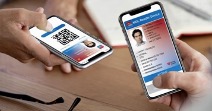
Before exploring potential use cases, it is helpful to review the security architecture that forms the basis of mDL. Unlike a simple photo of a physical ID, a true mDL, based on the international ISO/IEC 18013-5 standard, is inherently more accurate and tamper-proof. Customers use their mDL by tapping or scanning to have it read and cryptographically verified, rather than simply showing the credential.
- Legally Compliant: Each state issuing mDLs has ensured their laws make the mDL legally equivalent to physical cards, maintaining reciprocity between states.
- Definitive Authenticity: Unlike physical cards that rely on easily duplicated features like microprint or UV ink, mDLs use digital signatures. They’re endorsed or signed by the issuing authority (e.g., a state DMV). This cryptographic verification provides a higher level of confidence in authenticity and accuracy compared to physical ID verification.
- Fast Cryptographic Verification: mDL data is cryptographically signed and updated regularly, making the signature instantly verifiable by a merchant’s mDL Reader. This verification confirms the data is accurate and the card status is current.
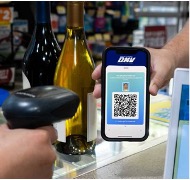
- Reduced Handling of PII: mDLs minimize data sharing by allowing selective disclosure. A liquor store merchant, for example, only needs "over 21" confirmation, not the customer's birthdate, photo, or address. This ability to request only the necessary data directly mitigates a merchant's data liability concerns.
Strategic Business Considerations

Addressing Core Merchant Concerns
Merchants have raised several primary concerns regarding mDL technology. Objectively addressing these points is essential for informed decision-making.
1. Data Liability: Capture Only What is Needed
Merchants can fear unnecessary data capture and liability. mDL’s selective disclosure is designed to address privacy and security. Reader applications are configured to request only the minimum necessary data (e.g., "Over 21: Yes/No") so that they do not receive or store superfluous or risky information (like full address or DL number) unless required (e.g., hotel check-in). Proper mDL implementation protects merchants by limiting their liability.
2. Scenarios When Commerce Has to Happen Offline
Merchants worry about the reliability of centralized systems and the failure of connectivity.
- Decentralization is Key: mDLs are designed for resilience, allowing decentralized verification. The customer's phone can verify the ID directly with the merchant's reader via Bluetooth, NFC, or WiFi Aware. This eliminates the need for central server access, ensuring transactions proceed during internet outages or in remote locations.
- Privacy Enhancement: Merchants can rely on cryptographic proof from the consumer's device, which functions in an offline setting, rather than central online checks that could create opportunities for transaction surveillance.
3. Transaction-Based Pricing Model
Some merchants are concerned about a potential transaction-based pricing model ("callback pricing") associated with checking a central server for data or revocation status. However, mDLs are decentralized, and DMVs have generally approached this as Digital Public Infrastructure [5]. The operational business model should remain similar to existing physical cards, where merchants choose and purchase equipment for scanning physical driver’s licenses and IDs.
4. Hardware Upgrades: Scaling Across Thousands of Devices
mDL Capabilities: eCommerce and Split Transactions
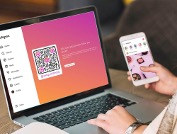
mDL remote presentation leads directly to the concept of the split online-in-person transaction, ensuring identity verification across the digital and physical commerce divide. For example:
- Online: The customer places an order and performs the initial remote age verification using their mDL (ISO 18013-7).
- In-Person (Delivery): The delivery driver uses a handheld mDL reader to perform a second, in-person verification of the customer's mDL (ISO 18013-5) to confirm the recipient matches the online order, ensuring compliance at the point of hand-off.
This split-verification model ensures a seamless, compliant, and fraud-resistant experience that integrates physical and digital commerce, solving challenges faced by modern retailers.
Implementation Considerations for Merchants
For Merchant Advisory Group (MAG) members, integrating mDL technology is manageable through a structured approach:
- Structured Rollout: A successful approach involves an iterative rollout, starting with pilot locations, specific high-risk transactions, or targeted locations to facilitate learning, fine-tune procedures, and ensure systems are responsive to real-world deployment.
- Liability Management: Staff training should heavily emphasize the principle of selective disclosure, ensuring employees understand how the mDL reduces their burden of PII handling while increasing the reliability of identity verification.
- Targeted Efficiency: mDL can streamline and accelerate numerous merchant processes. Apply mDL to operational pain points and measure the results.
- Enabling New eCommerce Channels: The mDL provides the foundation for strong identity verification for high-value or regulated digital transactions (e.g., BOPIS for controlled goods). It bridges the gap between the digital transaction and the physical pickup/delivery, securing the crucial "last mile" of eCommerce.
- Age-Verification Modernization: For regulated transactions (alcohol, tobacco, cannabis), the simple, unambiguous "Yes/No" age verification feature eliminates human error and enables consistent regulatory compliance with maximum efficiency.
Conclusion
The Mobile Driver's License (mDL) provides a verifiable, standardized, and privacy-enhancing digital identity credential for the merchant ecosystem. By objectively evaluating the security advantages, understanding the expanded capabilities like eCommerce verification (ISO 18013-7), and addressing common operational concerns, merchants can make an informed decision on how and when to integrate mDL technology into their operations.
References
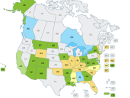
- In early 2026, there are 7.9M mDL holders across 22 U.S. states. 46% of the U.S. population could get an mDL today and would do so if they had places that accept it. https://www.mdlconnection.com/implementation-tracker-map/
- Denmark, Australia, New Zealand, Japan, and EU wallets along with several South American countries are noted in https://regulaforensics.com/blog/mobile-drivers-license-verification/ and other market research.
- AAMVA and state DMVs will directly work with relying parties: AAMVA Digital Trust Service for Relying Parties.
- https://www.truvity.com/blog/eudi-wallet-timeline-why-starting-implementation-now-is-low-risk
- https://www.gatesfoundation.org/ideas/digital-public-infrastructure — What is Digital Public Infrastructure?